

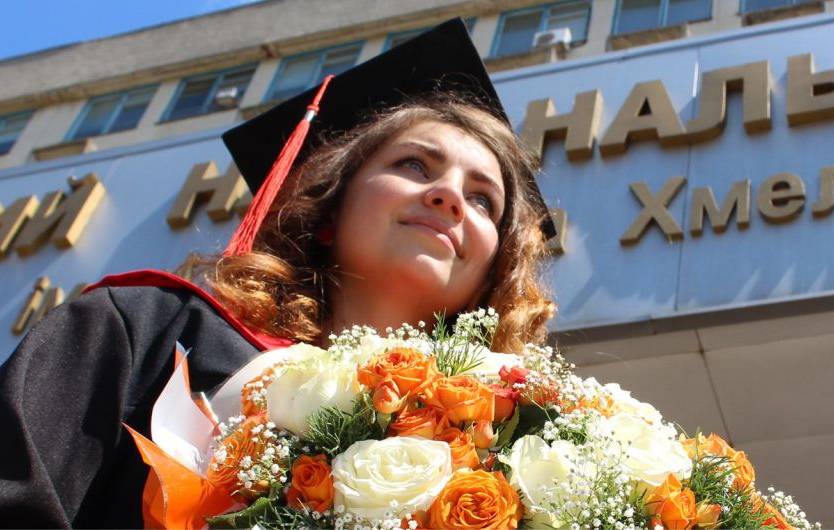


A first-year student of the Educational-Scientific Institute of Economics and Law at Bohdan Khmelnytsky National University of Cherkasy, Anastasiia Mishchenko, has joined the international initiative EU NEIGHBOURS EAST as a Young European Ambassador and recently published her first blog on the campaign’s official website.
Anastasiia’s partner in this publication was Dmytro Makarenko, a student of Yaroslav Mudryi National Law University, originally from Zaporizhzhia. Together, they created a text that became the voice of Ukrainian youth from frontline cities for all of Europe.
EU NEIGHBOURS EAST is a communication campaign of the European Commission for the Eastern Partnership countries: Ukraine, Georgia, Moldova, Armenia, Azerbaijan, and Belarus. Its main goal is to show that the European Union is not just abstract politics, but real people, opportunities, projects, and values that change lives.
Within this initiative operates the Young European Ambassadors network – young activists, students, volunteers, and communicators who speak about European values in the language of their generation. They do not merely share information; they talk about freedom, human dignity, solidarity, and the future through personal stories.
For Ukraine today, this platform has special significance. In wartime, it becomes a channel through which European society can see not only frontline reports, but also how Ukrainian teenagers and students live, what they think, and how they fight for their future.
In their joint blog, Anastasiia Mishchenko and Dmytro Makarenko wrote about the so-called “frontier generation” — young people who grow up and mature in cities that live to the sounds of sirens and explosions: Kharkiv, Zaporizhzhia, Mykolaiv, and Kherson.
This text is not about war itself. It is about what it means to be young when the very idea of “normal life” has been destroyed.
The authors show how things that are ordinary for most European youth — studying in classrooms, meeting in cafés, evening walks, plans for the future – have been replaced by bomb shelters, curfews, and constant anxiety for Ukrainian teenagers.
They describe how schools in Kharkiv operate in metro stations, how universities have turned into “Zoom campuses in basements”, where students take exams to the sound of air raid sirens, and how young people are pursuing not only professions but also survival skills.
A particularly powerful section concerns social life. Young people from frontline cities have become the “curfew generation”: their friendships are formed not in clubs or at parties, but in shelter corridors, where after a few hours of shared fear and waiting, all masks disappear. They immediately talk about what matters most – life, death, values, the future.
Another topic is volunteering. The blog shows how Ukrainian youth very early stopped being “those who are protected” and became those who protect others. Students aged 18–20 organise humanitarian warehouses, search for medical supplies abroad, deliver food to the elderly, and weave camouflage nets. For them, this is not heroism – it is a way to regain control over their own lives.
The authors also honestly discuss the psychological cost of this experience: constant tension, the inability to make plans, guilt over any moment of joy. But at the same time, they speak of the incredible inner strength of a generation that has chosen not to break.
The blog by Anastasiia Mishchenko and Dmytro Makarenko is not just a publication. It is a way to explain to Europe that the war in Ukraine is not only about the front line and geopolitics. It is about millions of young people who are studying, falling in love, dreaming, and volunteering in a reality where there are no guarantees for tomorrow.
Through the EU NEIGHBOURS EAST platform, this voice is heard in Brussels, Berlin, Paris, and other European cities. It helps to build empathy, understanding, and support for Ukraine – not as an abstract country, but as a society of living, strong, dignified people.
For Bohdan Khmelnytsky National University of Cherkasy, the student’s participation in such an initiative is an example of how its youth is becoming part of the European dialogue. And for Anastasiia Mishchenko, it is the first – but significant – step in an important mission: to speak on behalf of her generation so that it will be heard far beyond the borders of Ukraine.
The Educational-Scientific Institute of Economics and Law


