

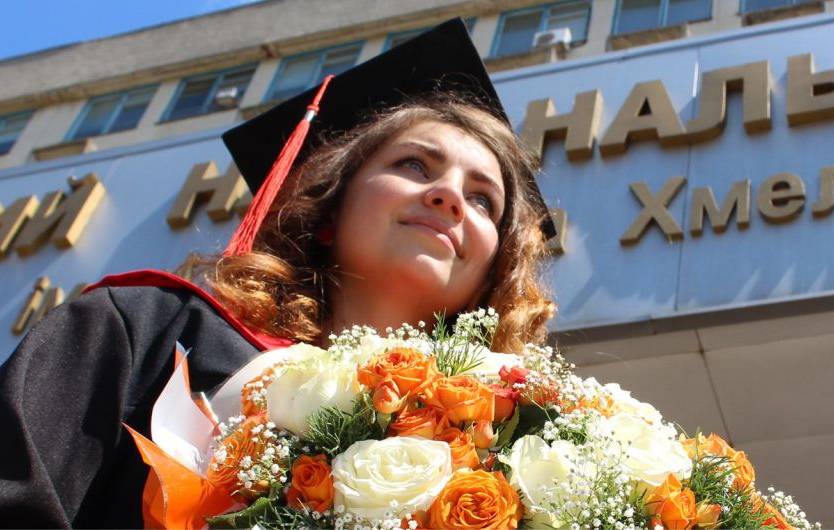


Cooperation with the University of Valladolid (Spain) under the Erasmus+ programme is opening even more opportunities for academic development and international partnership. This project, initiated by Nataliia Slyvka, Head of the Department of Modern English Teaching Practices, launched systematic international mobility at Bohdan Khmelnytsky National University of Cherkasy and laid the foundation for the further expansion of academic cooperation.
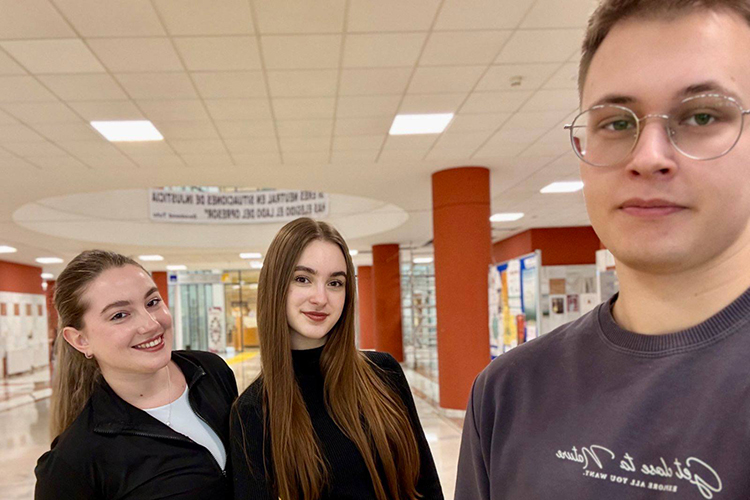
During the spring semester, four BKNUC students will study at the University of Valladolid. Anastasiia Diakonova and Daryna Kurochenko, students of the Educational-Scientific Institute of Foreign Languages majoring in Secondary Education, already studied at the University of Valladolid in the autumn semester. After successfully completing their examinations, they received an extension of their grants. They are now joined by Andrii Honcharenko, a student of the Educational-Scientific Institute of Foreign Languages majoring in Secondary Education, and Anastasiia Kaliuzhna, a fourth-year student of the Educational-Scientific Institute of Economics and Law majoring in Law. All participants note the high quality of teaching, the friendliness of professors, and the valuable experience of studying in an international academic environment.
Anastasiia Kaliuzhna shared her impressions:
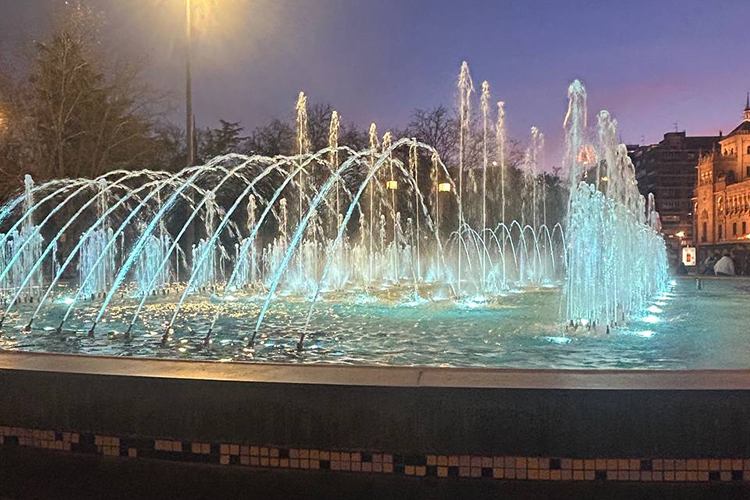
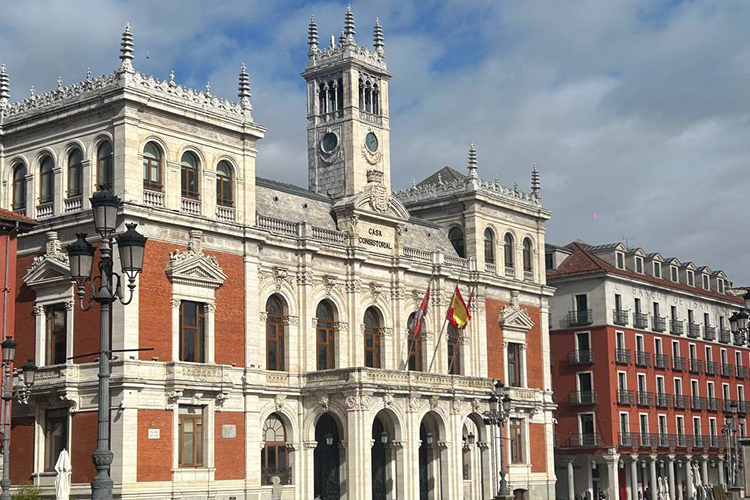
“Valladolid is a city with a unique atmosphere and rich history. Its architecture impresses with a harmonious combination of medieval buildings, majestic cathedrals, and cosy squares. I was especially fascinated by the historic part of the city and the old university buildings, which create a distinct academic ambience.”
Within the framework of the project, which has been operating since 2019, 25 grants have been awarded to students and faculty members, opening up broad opportunities for international cooperation, academic development, and the exchange of experience.
The project coordinator, Associate Professor Nataliia Slyvka, emphasised:
“It is worth noting that all students approach their studies responsibly and successfully meet the academic requirements. We receive very positive feedback from our Spanish colleagues regarding the preparation level of the students of the Educational-Scientific Institute of Foreign Languages, their motivation, responsibility, and active participation in the educational process. This demonstrates the high quality of education and the competitiveness of our students in the international academic environment. It is particularly gratifying that, despite the project’s initial focus on the Educational-Scientific Institute of Foreign Languages, the expansion of cooperation has made it possible to involve other structural units of the university in academic mobility – in particular, students majoring in Law as well as postgraduate students in Economics, and Biology and Biochemistry.
Interdisciplinary cooperation strengthens international ties, opens up new opportunities for students of different specialisations, and contributes to the development of a unified academic space. Such a format of partnership not only enhances the university’s international reputation but also creates a foundation for further joint educational and research initiatives.”


https://cdu.edu.ua/en/news-en/bknuc-students-will-study-at-the-university-of-valladolid-under-an-international-mobility-programme.html#sigProId597d3f5909
The Department of Modern English Teaching Practices


